
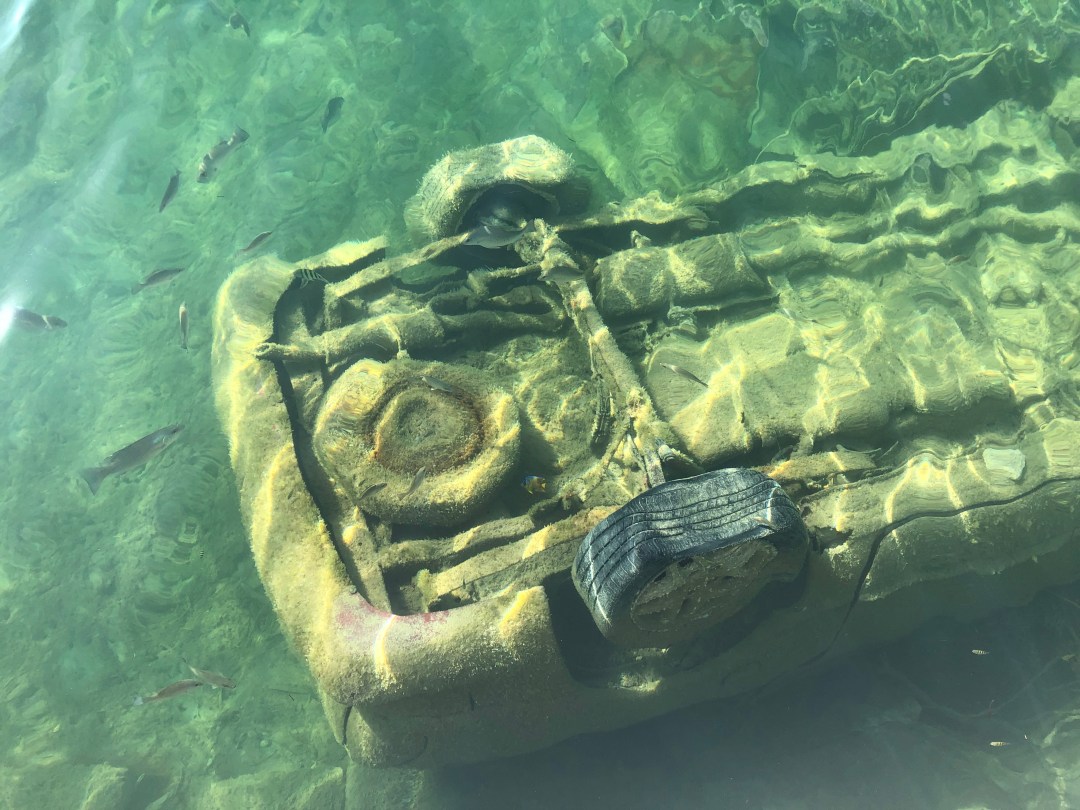
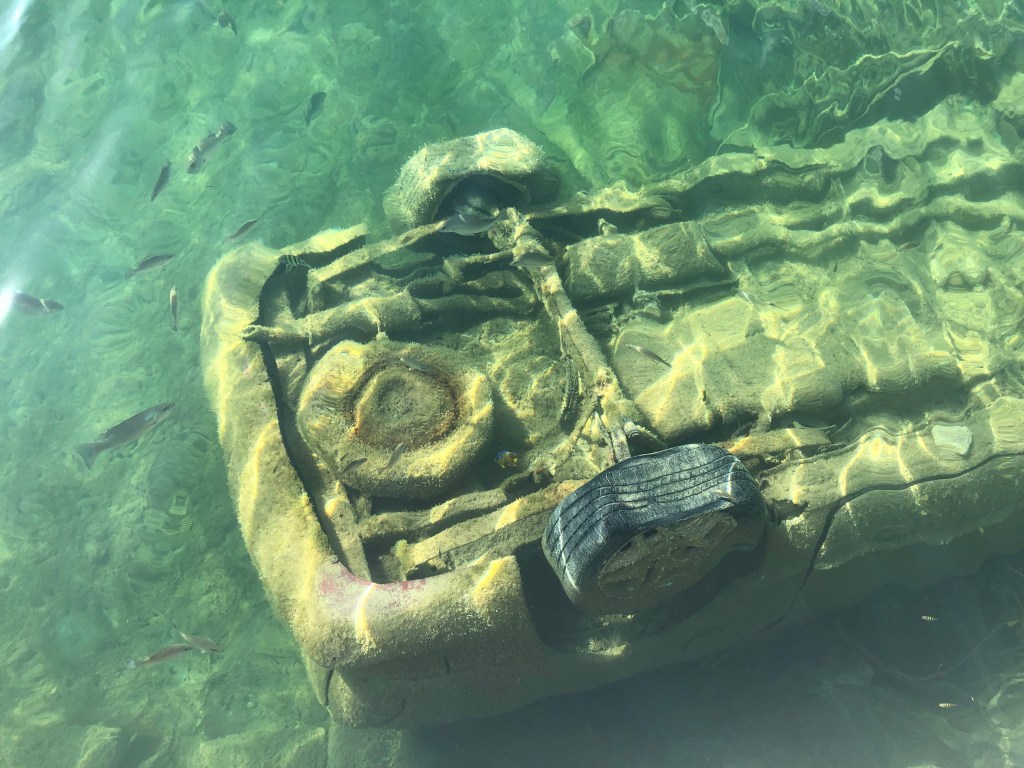
In September 2019, category 5 Hurricane Dorian hit The Bahamas—and hovered directly over the country for over 24 hours. There were 74 reported fatalities and 245 people missing. Thousands of homes were destroyed, and the environmental damage was unfathomable. Whole forests were damaged by the extensive salt water that soaked into the soil. An oil reserve spewed its black oil all over the forest across the street. Multiple cars were thrown into the sea.
Leslie went to The Bahamas as part of a disaster relief effort following the hurricane. Her job: coordinate helicopter and plane flights for personnel and supplies coming into the islands and between islands.
Other relief workers would make requests for flights—for themselves, their team members, or for supplies—and Leslie would determine priority based on urgency, importance, flight path, timing, and even weight. As helicopters are delicate and need to be carefully balanced and have a maximum weight limit, determining what could be flown and when was just as important as determining what was the most urgent.
Sometimes relief workers had to fly to another island to conduct an assessment, or meet with a government official. Other times they needed to fly office supplies like printer cartridges. But one of the continuously high priority items was food for relief workers on remote islands. As some of the islands had everything destroyed, there wasn’t even a local grocery store to buy food items. Thus, the team’s supplies had to be regularly purchased on islands that had a strong supply chain, and sent via helicopter to keep them operating.
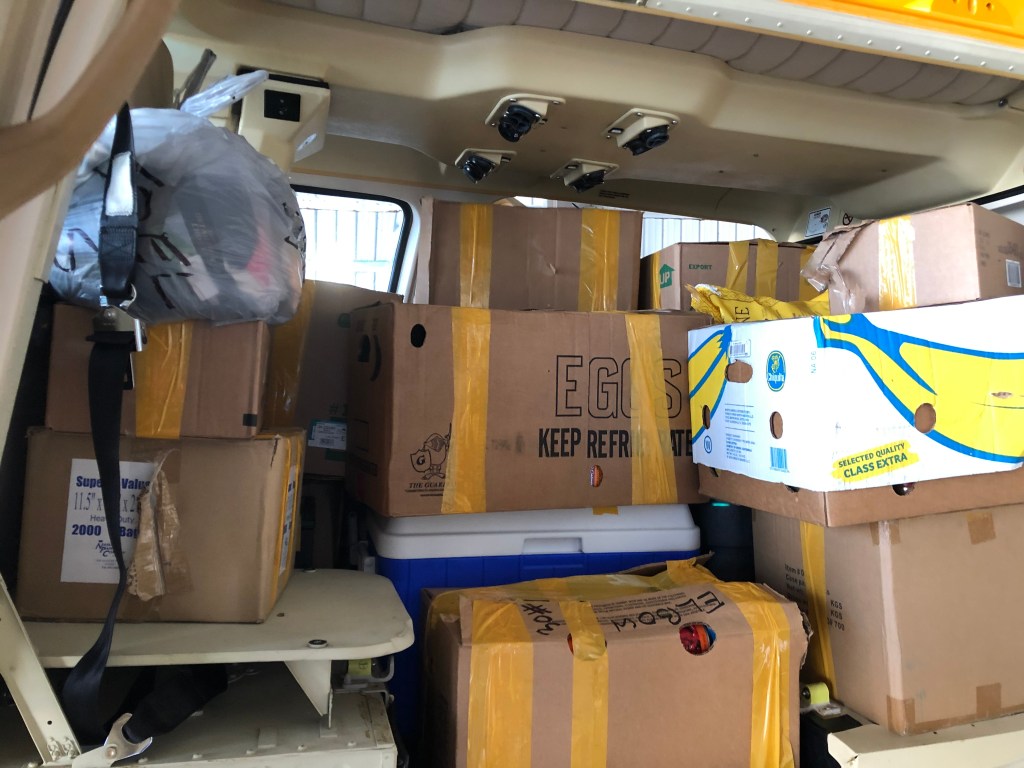
The helicopter also could only fly during daylight hours, and could typically fly in only a clockwise or counterclockwise path around the islands. This flight path reduced waste in helicopter resources including time and fuel, which was crucial for programming—it cost around $700 an hour to operate the helicopter!
Leslie took all this into account—was it worth running the printer ink on a helicopter? Only if it could be simply bundled in with another request going the same direction. If a relief worker needed to meet a government official on a particular island at a particular time, would they make it on time if the flight ran clockwise, or counterclockwise? And would it make sense for all the other requests to run in the same flight path direction?
It wasn’t easy, but it was a great challenge of putting together complicated logistics and watching it all work out. Sometimes if there was no other way to work around it, Leslie had to find other creative methods to move supplies and people—were commercial flights available? Many of the airports had been damaged and were not receiving flights. Was there a World Food Programme barge going the same direction on the same day? Maybe they’d be able to share some space for some supplies. Could someone or something come in from a boat in Miami? That wasn’t out of the realm of options to choose from.

It was fast-paced, intense, and complex, but well worth every moment of it. Moving supplies and personnel helped support other relief workers on the ground directly involved in programming. Without the helicopter movement, these programs would move slowly or cease to function altogether. In this way, Leslie was able to have an impact on programming from kitchen supply distributions to home rebuilds to water engineering projects.
 Fulcrum Missions